Airports and Planes: Emotional Zoos

Airports and planes.

No place a better exhibit of human emotion:

Joy arises out of greeting long-lost Love
As does Despair, leaving newly-found Love

Fear arrives out of leaving it all behind
and departs when thinking of everything that’s ahead

Greed lives in the chatter of businessmen making the next big deal
While Modest asks if you’d like a drink with that

Honorable and Prideful are welcomed home with standing applause
Disparaged and Distraught take off to hopefully heal

The sounds of Gleeful, Cheerful, and Merry turn festive the neutral walls
Just as Longing, Delayed, and Stranded make them a cold purgatory

Energetic skips past Sleepy curled up in a corner
While Enlightened rises from a tome two chairs down

And Wanderlust, one of the rarest and most sought emotions of all
Begins to be released—or succumbed to?—here

In flight,
Calm sits next to Anxious
While Bored and Caring attend to us
Behind, Curious gazes out with Admiration
And Faithful hopes something beyond can turn him into Tranquil

Nostalgia’s weight could ground many flights of homecomers
And Ecstasy’s fuel seemingly gets us there quicker

Behind all that, Lust has its release in sneaky fashion.

I decided to get out of my writing comfort-zone for National Poetry Month (which was actually in April), and lately I’ve also been enjoying the “anti-poetry” of Robert M. Drake, Marisa Crane, and Joe Straynge on Instagram. 

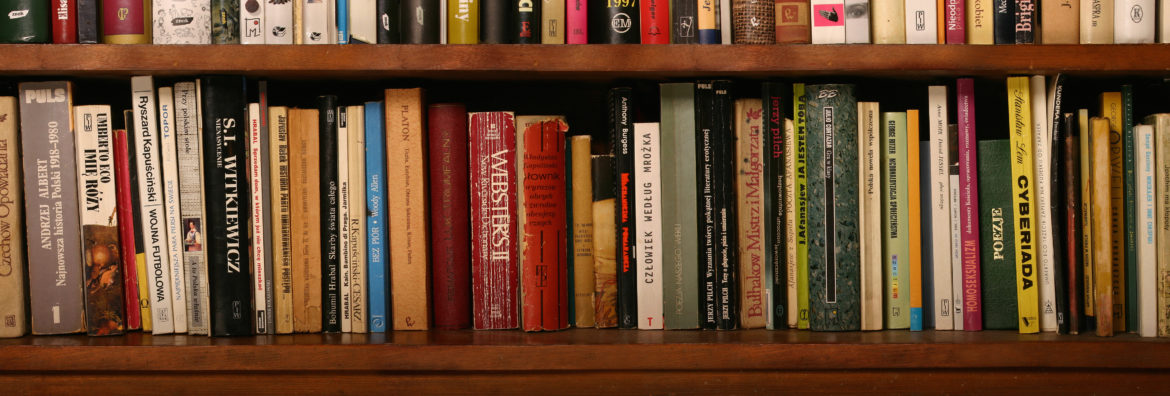
Photo is mine, taken while being stranded overnight in Denver International Airport in August 2014.


40 Things I Learned From 20 Books in 2014

Shamelessly inspired by this list of Julien Smith’s. Also check out my lists from 2012 and 2013.

Mainly due to spending an inordinate amount of time on planes and in airports, I easily hit my goal of 20 books again this year. I am trying to alternate between reading non-fiction and more classics, and even added “Read Modern Library’s Top 100 Best Novels” to my bucket list.

Here’s 40 of my favorite takeaways, quotes, and passages from the 20 books I read in 2014 (italicized where taken straight from the author):

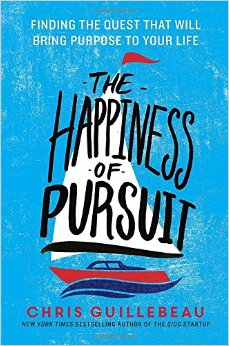
The Happiness of Pursuit by Chris Guillebeau

161z2upEqVmL._SY344_BO1,204,203,200_. What people say about an adventure or quest that involves perceived risk:
Successful outcome: brave, courageous, confident
Failed outcome: stupid, risky, naive, arrogant

2. Research shows we enjoy planning a vacation as much as taking the vacation. Anticipation is a powerful force.

Sex at Dawn by Christopher Ryan and Cacilda Jetha
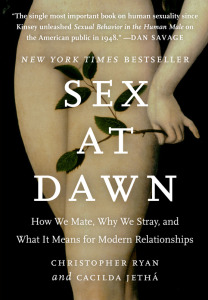
Sex_at_Dawn_Book_Cover

3. No nonhuman primate [that lives in groups] is monogamous, and adultery has been documented in every human culture studied—including those in which fornicators are routinely stoned to death (Leviticus 20:10). In light of all this bloody retribution, it’s hard to see how monogamy comes “naturally” to our species. Why would so many risk their reputations, families, careers—even presidential legacies—for something that runs against human nature? Were monogamy an ancient, evolved trait characteristic of our species, as the standard narrative insists, these ubiquitous transgressions would be infrequent and such horrible enforcement unnecessary. No creature needs to be threatened with death to act in accord with its own nature.

4. Scottish researcher Tony Little found women’s assessment of men as potential husband material shifted if they were on the pill. Little thinks the social consequences of his finding may be immense: “Where a woman chooses her partner while she is on the Pill, and then comes off it to have a child, her hormone-driven preferences have changed and she may find she is married to the wrong kind of man.”

Influence by Robert B. Cialdini71FDaBi9zaL
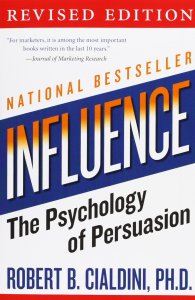
5. Research on elementary school children shows that adults view aggressive acts as less naughty when performed by an attractive child and that teachers presume good-looking children to be more intelligent than their less-attractive classmates.

6. An example of the foot-in-the-door technique is when residents of a town were initially asked by volunteers to accept and display a three-inch “be a safe driver” sign (a trifling request) on their doors. Two weeks later, volunteers asked them to put up a lawn sign and had good compliance. Importantly, this technique worked just as effectively when the first request was related to state beautification, not driver safety at all — signing the beautification petition changed the view these people had of themselves. They saw themselves as public-spirited citizens who acted on their civic principles. There is internal pressure to bring self-image into line with action. There is an external pressure to adjust image according to the way others perceive us.

Talk Like Ted by Carmine Gallo
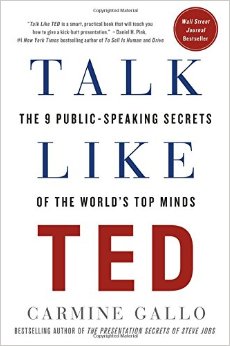
7. If you can’t explain your big idea in 140 characters or less, keep working on your message.

8. Scientists have produced a mountain of evidence showing that concepts presented as pictures instead of words are more likely to be recalled. Put simply, visuals matter—a lot. If you hear information, you are likely to remember about 10 percent of that information three days later. Add a picture, however, and your recall rate will soar to 65 percent. To put that into context, a picture will help you remember six times more information than listening to the words alone.

 The UltraMind Solution by Mark Hyman
cvr9781416549727_9781416549727_hr

9. Depression is not a Prozac deficiency. The real problem with conventional medical training is that doctors are not trained to be healers, but to be pharmacologists (except for surgeons). This problem is a direct consequence of the myth of diagnosis. We are trained to name the disease, and then assign a medication to treat it.

10. The unique combination of all your genes combined with the toxic environment in which you live makes you sick. Our environmental influences pull the trigger and cause sickness. If you had those genes but lived in a more pristine time without toxins, you would likely not get sick. Each one of us is susceptible. Some of us break down at very low level of toxicity–like those with autism or Parkinson’s, they are the yellow canaries warning the rest of us that something is wrong with the “air”.

The Subversive Copy Editor by Carol Fisher Saller

11. Style rules aren’t used because they’re “correct”. They’re used for your convenience in serving the reader.
12. Stet (or “let it stand” in Latin) on an edited paper tells the writer to ignore an edit.

Steal Like an Artist by Austin KleonSTEAL-cover
13. All advice is autobiographical.

14. There is a kind of fallout that happens when you leave college. The classroom is a wonderful, if artificial, place: Your professor gets paid to pay attention to your ideas, and your classmates are paying to pay attention to your ideas. Never again in your life will you have such a captive audience. This is actually a good thing, because you want attention only after you’re doing really good work. There’s no pressure when you’re unknown. You can do what you want. Experiment. Do things just for the fun of it. When you’re unknown, there’s nothing to distract you from getting better. No public image to manage. No huge paycheck on the line. No stockholders. No e-mails from your agent. No hangers-on. You’ll never get that freedom back again once people start paying you attention, and especially not once they start paying you money. Enjoy your obscurity while it lasts. Use it.

Zero to One by Peter Thiel
thiel_6_4_front15. Creative monopolists give customers more choices by adding entirely new categories of abundance to the world. Creative monopolies aren’t just good for the rest of society, they’re powerful engines for making it better. Even the government knows this: that’s why one of its departments works hard to create monopolies (by granting patents to new inventions) even though another part hunts them down (by prosecuting antitrust cases). It’s possible to question whether anyone should really be awarded a legally enforceable monopoly simply for having been the first to think of something like a mobile software design. But it’s clear that something like Apple’s monopoly profits were from designing, producing, and marketing the iPhone were the reward for creating greater abundance, not artificial scarcity: customers were happy to finally have the choice of paying high prices to get a smartphone that actually works.

16. Like acting, sales works best when hidden. This explains why almost everyone whose job involves distribution–whether they’re sales, marketing, or advertising–has a job title has nothing to do with those things. People who sell advertising are called “account executives.” People who sell customers work in “business development.” People who sell companies are “investment bankers.” And people who sell themselves are called “politicians.” There’s a reason for these redescriptions: none of us wants to be reminded that we’re being sold.

20 Something Manifesto by Christine Hassler 1577315952
17. A twenty something is someone who is constantly evaluating and analyzing his or her life and continually coming up with the answer “I don’t know.”

18. “It isn’t what I want to do forever, but it feels right, right now.” If you can say this, then 9 times out of 10 you are doing the right thing, and you shouldn’t worry about what’s next until you can’t say this honestly anymore. So many twenty somethings that are perfectly content but feel pressure to figure out their next move.


The Millionaire Next Door by Thomas J. Stanley and William D. DankoBook-Club-The-Millionaire-Next-Door
19. Seven common denominators upon those who accumulate wealth:
1. They live well below their means
2. They allocate their time, energy, and money efficiently, in ways conducive to building wealth.
3. They believe that financial independence is more important than displaying high social status.
4. Their parents did not provide economic outpatient care.
5. Their adult children are economically self-sufficient.
6. They are proficient in targeting market opportunities.
7. They chose the right occupation.

20. To build wealth, minimize your realized (taxable) income and maximize your unrealized income (wealth/capital appreciation without a cash flow).

3819e59c-a52b-428b-8d53-83c498cf8898One Hundred Years of Solitude by Gabriel Garcia Marquez

21. In old Colombia, if it felt good: fuck it. Even if it is your aunt or sister.

22. I want to name my dog/kid/something Melquíades one day.

Flow by Mihaly Csikszentmihalyi
23. Enjoyment appears at the boundary between boredom and anxiety, when the challenges are just balanced with the person’s capacity to act.

24. The essence of socialization is to make people dependent on social controls, to have them respond predictably to rewards and punishments. And the most effective form of socialization is achieved when people identify so thoroughly with the social order that they no longer can imagine themselves breaking any of its rules. One must particularly achieve control over instinctual drives to achieve a healthy independence of society, for as long as we respond predictably to what feels good and what feels bad, it is easy for others to exploit our preferences for their own ends.

The Adventures of Johnny Bunko by Daniel Pinkjohnny-bunko
25. You can do something for instrumental reasons–because you think it’s going to lead to something else, regardless of whether you enjoy it or it’s worthwhile. Or you can do something for fundamental reasons–because you think it’s inherently valuable, regardless of what it may or may not lead to. And the dirty little secret is that instrumental reasons usually don’t work. Things are too complicated, too unpredictable. You never know what’s going to happen. So you end up stuck. The most successful people — not all of the time, but most of the time — make decisions for fundamental reasons. They take a job or join a company because it will let them do interesting work in a cool place — even if they don’t know exactly where it will lead.

26. “What’s the most powerful force in the universe? Compound interest. It builds on itself. Over time, a small amount of money becomes a large amount of money. Persistence is similar. A little bit improves performance, which encourages greater persistence, which improves performance even more. And on and on it goes. Lack of persistence works the same way — only in the opposite direction. … The world is littered with talented people who didn’t persist, who didn’t put in the hours, who gave up too early, who thought they could ride on talent alone. Meanwhile, people who might have less talent pass them by. … That’s why intrinsic motivation is so important. The more intrinsic motivation you have, the more likely you are to persist. The more you persist, the more likely you are to succeed.”

Animal Farm by George OrwellPrint
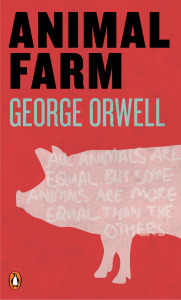
27. Farm animals should not be allowed to unionize.

28. Read a classic book that you missed out on in high school and it’s damn-near guaranteed you will hear or read some sort of reference to it the week following that you wouldn’t have picked up on before.

Breakfast of Champions by Kurt Vonnegut
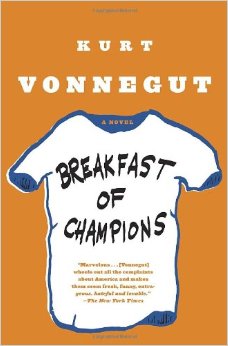
29. “We are healthy only to the extent that our ideas are humane.”

30. Want to be an entertaining writer? Strip everything in the world down to the most basic elements you can, and voila.

Purple Cow by Seth Godin 
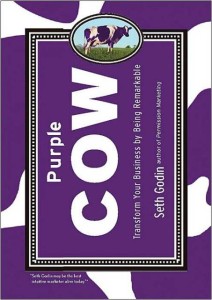
31. Most companies are so afraid of offending or appearing ridiculous that they steer far away from any path that might lead to this result. They make boring products because they don’t want to be interesting. When a committee gets involved, each well-meaning participant sands off the rough edges, speaking up for how their constituency might not like the product. The result is something boring and safe.

32. In your career, even more than for a brand, being safe is risky. The path to lifetime job security is to be remarkable.

A Whole New Mind by Daniel Pink wnm
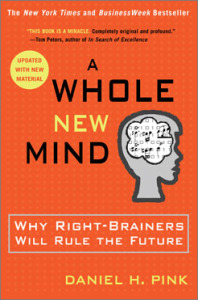
33. Last century, machines proved they could replace human backs. This century, new technologies are proving they can replace human left brains. Management meta-guru Tom Peters puts it nicely, saying that for white collar workers “software is a forklift for the mind.” It won’t eliminate every left-brain job. But it will destroy many and reshape the rest. Any job that depends on routines–that can be reduced to a set of rules, or broken down into a set of repeatable steps–is at risk. If a $500/month Indian chartered accountant doesn’t swipe your comfortable accounting job, Turbo-Tax will.

34. There are three types of beings–those who create culture, those who buy culture, and those who don’t give a shit about culture. Move between the first two.

A Farewell to Arms by Ernest Hemingway
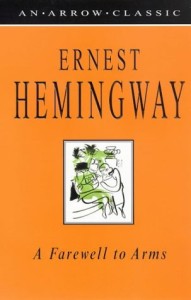
35. Catherine Barkley is one of the more annoying characters in literature I have ever read.

36. The dialogue between Frederic and Count Greffi is some of the best I have ever read.
10-1080R1 PoketheBoxMechPoke the Box by Seth Godin

37. We reward those who draw maps, not those who follow them. 

38. The original Starship Enterprise was conceived by Matt Jefferies. It looked like a cross between a frisbee and a can opener. Clearly wrong. But Matt had the drive to deliver. He took the wrong start and revised and improved and innovated until the Enterprise we know and love came to be. The hardest part, it seems to me, was the first one, the wrong one. Poking doesn’t mean right. It means action.

Lexicon by Max Barry lexicon_usa_hb_big

39. There are (mostly) no squirrels in Australia.

40. “I just think it’s missing the point to get upset about bias in Fox News or MSNBC or whoever. I see this all the time: I mention to someone that I watch Fox and it’s like I just slaughtered a baby. They ask how I can watch that, it’s just propaganda, etc etc. And they know this not because they’re ever sat down and spent any time with it but because their favourite news channel, i.e. a Fox competitor, sometimes plays a clip from a Fox show and it makes Fox look really stupid.

Well, you know what, Fox does that, too. If I only watched Fox, I’d think you must be really stupid, watching that other show I see clips from on Fox sometimes.

But I don’t just watch Fox, because the way to beat biased reporting isn’t to find the least biased one and put all your trust in that. First of all, they’re all biased, from the language they use and the framing down to the choice they make about which stories to report. The gap between the most biased news show and the least is pretty small, all things considered.

But more importantly, relying on a single source of information means you can’t critically evaluate it. It’s like you’re locked in a room and every day I come in and tell you what’s happening outside. It’s very easy for me to make you believe whatever I want. Even if I don’t lie, I can just tell you the facts that support me and leave out the one’s that don’t.

That’s what’s happening if you’re getting all your news from one place. If you stop listening to someone the second you hear a word or a phrase you’ve been taught belongs to the enemy, like “environment” or “job creators,” that’s what you’re doing. You might be an intelligent person, but once you let someone else filter the world for you, you have no way to critically analyse what you’re hearing. At best, absolute best case scenario, if they blatantly contradict themselves, you can spot that. But if they take basic care to maintain an internal logical consistency, which they all do, you’ve got nothing. You’ve delegated the ability to make up your mind.”


How the Grinch Got His Shit Together

How the Grinch Got His Shit Together

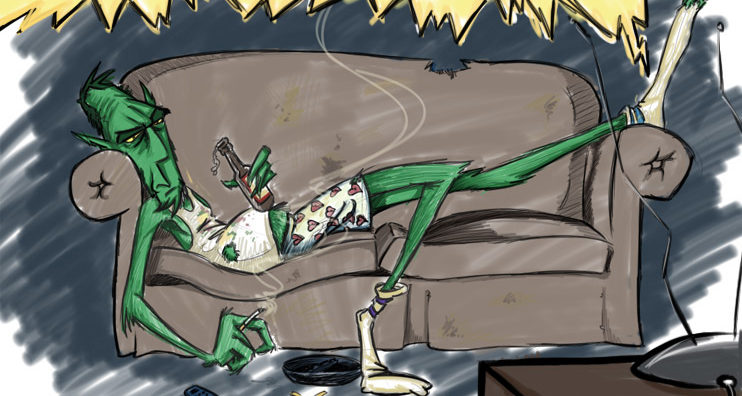
A very 2014 poem by Andrew Elsass and (mostly) Dr. Seuss. Image: TheChairmanofAwesome.

Every person down in Presentville liked their lives a lot…
But the Grinch, who lived north in High Horse, did not.
The Grinch hated the Presents, and found something to bitch about every season!
Now, please don’t ask why. No one knows quite the reason.

It could be he always thought things would be better next year.
It could be perhaps, that his mind was just full of fear.
But I think that the most likely reason of all,
May have been that his consciousness was two sizes too small.

Whatever the reason for him always being snappy,
He sat there on social media, hating those who were happy.
Staring on from his screen with a sour, Grinchy frown,
He felt jealous of his ‘friends’ living ‘perfect’ lives out on the town.

For he knew that every person he followed,
Was living a more exciting life while he sat and wallowed.
“And they’re getting married and having kids!” he snarled with a sneer,
“It’s like we’ve reached adulthood! It’s practically here!”

Then he growled, with his Grinch fingers nervously drumming,
“I MUST find some way to get this happiness to me forthcoming!”
It was an obsessive thought, this he knew,
But an easy life full of wealth he felt he was entitled to.

But then! Oh, the thoughts! Oh, the thoughts!
Thoughts! Thoughts! Thoughts!
That’s one thing he hated in his mind! All the THOUGHTS!
THOUGHTS! THOUGHTS! THOUGHTS!

Then the Presents, he would see, would post and hashtag!
And they’d hashtag! And they’d hashtag! And they’d HASHTAG!
HASHTAG! HASHTAG! HASHTAG!
They would hashtag about what they were grateful for, and hashtag about their dreams,
Which was something that made the Grinch want to scream!

And THEN they’d do something he liked least of all!
Every person down in Presentville, the tall and the small,
Would assemble at bars where the jukebox would be blaring,
They’d stand in circles, snapping pictures they’d start sharing!

They’d share on Facebook! And they’d share on Instragram! And they’d SHARE! SHARE! SHARE! SHARE!

And the more the Grinch saw of all this happy sharing,
The more the Grinch thought, “How is my life comparing?”
“Why, for 24 years I’ve put up with it now!”
“That’s it, I must finally arrive! But HOW?

Then he got an idea! An awful idea!
THE GRINCH GOT A NARCISSTIC, AWFUL IDEA!
“I know just what I’ll do!” the Grinch laughed, creating a Tinder account,
Dreaming of the stories he’d have and his incoming match amounts.

And he chuckled and clucked, “What a great Grinchy trick!”
“With some fresh pictures of me, I’ll get all the hot chicks!”
“All I need is a name brand on myself…” The Grinch looked around,
But since he was still hourly, there were none to be found.

Did that stop the old Grinch? No! The Grinch simply said,
“If I can’t find any cash, I’ll put it on credit instead!”
Because no matter the angle he stood at in front of the mirror,
None of the filters could make his clothes fresher or his skin clearer.

So he put on the best outfit he had and hopped in his ride,
A 2003 Civic with fat rims on each side.
Then the Grinch said, “Swerve!” and his car started up,
Toward town shooting fat bass sounds from his sub.

Everyone was talking at coffee shops and bars like noisy larks,
All the Present people were talking together, generating sparks.
No one discussed office drama or feeling overworked,
No one discussed Kim Kardashian’s ass or Miley Cyrus’ twerk.

“This is stop number one,” the young Grinch said,
And he walked into the store, full of swagger from his toes to his head.
Few people’s heads turned, but the cute barista was at the counter,
The Grinch thought, “I’ll finally get her number, and shut up all the doubters.”

He stalled a few times, for a minute or two,
Checking his phone for inspiration and to see what was new.
Then the moment had passed and she went off duty anyway,
“Just as well,” he thought, “she’s not skinny enough to be my bae!”

Then he slithered and slunk, with a smile most loathsome,
Collecting the right goods so he’d no longer be lonesome.
Boots! And watches! Raw denim! Peacoats!
Tweed pants! Wool socks! Wayfarers! Shoes for boats!

Then the Grinch and his new debt put on each item,
And began to snap some selfies, adding Sutro, Inkwell, Walden.
Then he uploaded them to see whose eyes he could catch,
Along with the perfect bio, “Hit me up, just looking for some snatch!”

But hours later his confidence came crashing down quick as a flash,
Why that Grinch actually thought all these clothes would get him some ass!
With only two matches from bots, he deleted everything faster than you’d believe,
“I really wish,” sighed the Grinch, “I would have kept the receipts!”

And the Grinch beat himself up, and started home disgraced,
When he bumped into someone, looked up, and a saw a familiar face.
She was 5’5″, had nice lips, and blue-green eyes!
Little Jamie Clark, an old classmate from whom he once borrowed school supplies.

The Grinch had always had a crush on this tiny Present girl,
But never had the guts to give it a whirl.
She smiled at the Grinch and said, “Hi! I remember you!”
“What are you up to these days, is anything new?”

Nothing was, but that Grinch thought he was so smart and so slick,
He thought up some lies, and he thought them up quick!
“Why, my old friend,” the Grinch tried to be debonair,
“Life has been amazing, it can’t really compare.”

“I make close to six-figures, I guess I’ll declare,”
“With vacation, full benefits, and even dental care.”
And his fib bored the girl, “That’s nice,” she said,
“It was good seeing you,” and as she left the Grinch felt misled.

While some of what he said was a lie,
It was still a fact that he was looking extra fly!
Defeated, all he wanted to do was go home and get high,
But he didn’t even know anyone to buy from, he had no guy.

Trying to do what they say and count his blessings in life,
His mind just kept looping back toward how to bag a wife.
Wanting answers, the Grinch stayed up all night,
Switching between looking at addiction and inspiration, between dark and light.

And when he finally tried to call it a night and lie down,
He received a text from his old pal named Sal! He was here, back in town!
He wanted to hang! And catch up! And go downtown!
7 o clock that next night! At the back bar of Fox and Hound!

Like was habit, when they met the Grinch began mindlessly gossiping,
Not noticing his friend’s disapproval and that he had been blossoming:
“I am glad you say you are doing well, but I can see it in your eyes,”
“You feel like something is missing, and covering it up with lies.”

“That’s bullshit,” scoffed the Grinch, “that I simply don’t need to hear!”
And with shifty eyes he anxiously sipped on his beer.
The conversation tempered and changed subjects, and then his friend had to go,
And then a sadness in the Grinch emerged—it started in small. Then it started to grow.

But this feeling wasn’t making sense! He did everything he was supposed to do!
Frustrated, he ordered another round of Bud Heavy, in fact, make it two!
Perhaps maybe he could have gotten a little more swole and a little more fit,
Or perhaps…maybe everything he thought he knew was complete bullshit.

And the Grinch, walking home with his Grinch-sneaks cold in the snow,
Stood puzzling and puzzling: “How the hell could his be so?”
“But I had the threads! I had all the swag!”
“I got my jeans to have just the right amount of sag!”

And he refreshed for three hours, til his refresher was sore.
Then the Grinch thought of something he hadn’t before!
“Maybe happiness,” he thought, “doesn’t come from a kind of social score.”
“Maybe happiness…perhaps…means a little bit more!”

And what happened then? Well…in Presentville they say,
That the Grinch’s small consciousness grew three sizes that day!
And the minute he started appreciating what he had right then,
He started to view the world through a whole new lens.

So he took back the clothes and ignored his accounts,
And he himself, the Grinch! Began to take on the world, scorning his self-doubt.

A Confidence Carol: One Year Later

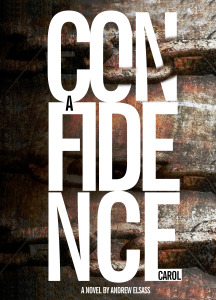
A year ago today, I released my second ebook, A Confidence Carol, on Amazon. Amongst fanfare limited to mostly friends and social media (although this tweet still makes my life), the book quietly rose to the 12,298 spot on Amazon’s sales rankings before purchases sputtered and ACC became exiled to the isle of misfit ebooks (or, where most ebooks live).

While I am still patiently waiting for the phone call about the movie rights, from start to finish I still consider the project one of the most fulfilling and rewarding things I have ever done. And of course the experience didn’t come without a takeaway or two about book writing, amongst other things:

1. Hire An Editor

Truthfully, as I was writing the first draft, I wasn’t quite sure if I would actually need to hire an editor or not. I mean, I wrote and edited HTGAJISPR just fine by myself and amazingly sold 20 copies. “Why would this be any different?” I thought.

And then I gave the manuscript to my editor for a free trial hour of editing.

When I received the first 10 redlined pages back from Marilyn, my wonderful editor, she had already uncovered major plot holes, character inconsistencies, and grammar problems that I probably would have otherwise overlooked. While some of my cultural references went over her head or just otherwise confused her, without her polish I never would have felt comfortable enough to…

2. Share With Friends

I can only speak to writing, but I imagine this applies to all forms of art. Sharing your shit is freaky. Never mind that it is an open invitation for criticism; moreso I just felt pretty damn selfish asking six friends to not only read 30,000 words of unknown quality, but to then give me their honest feedback and opinions, no matter how harsh it seemed. And you know what? They were more than happy to do it, and it helped me more than I could begin to express.

My favorite comment (compliment?) came from my friend and reviewer, Dana (who told my brother who told me): “You know, I had no idea what I was getting myself into, but this is actually pretty good.” While ebook reviewers can sometimes be soul-crushingly blunt, friends being blunt with you provides value that no anonymous reader can ever give.

3. Fruition

On February 14, 2013, I went to the Starbucks next to my apartment to write the initial plot outline and character descriptions for ACC. Almost exactly 10 months later, I took a day off work to camp out in a Starbucks on the other side of town, solely so I could publish the book and compulsively check sales without having to feign doing work at my office job.

And I have never told anyone this—but in the few weeks leading up to release day, I slacked off. Bad. I let myself become distracted with some other things going on in my life, and the flame for my little-big project—my baby, if you will—dwindled, and I almost feel apologetic for not sticking around with it until the very end. I let up, and in a way I feel like I let it (and myself) down. ACC required a seasonal release given its subject matter and source material, but for future projects (if possible) I plan on getting much more of the legwork done long before even thinking about a release date.

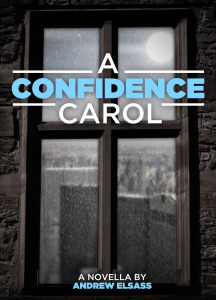
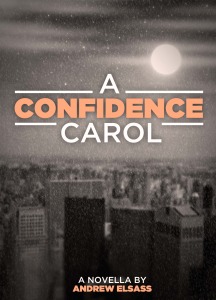
It was nothing with the story itself but more finer details, such the formatting and layout within the .ePub file that would have made the whole thing slightly more professional looking. Which is especially disappointing considering I refused to settle on other aspects, like the cover, which went through many revisions:

Cover 1cover_skyline_window cover_skyline_blue copy


Again, the story became what I envisioned it to be, but those few weeks leading up to the release left a sour taste in my mouth that I hope to never experience again. However, that all taught me another lesson…

4. Don’t Be Afraid To Outsource

Sure, there is nobility in DIY and all that I guess, but I’ll be damned if I ever code another ebook again. The plan for the next book is do print-on-demand or just go the traditional publishing route, but I have made a promise blood pact to myself that if I do ever write another ebook, I am hiring out for the coding work.

Another thing I plan to outsource is the marketing. The promotion I did do was limited, partly from a lack of time due to working on everything else involved with the book, partly because of those aforementioned distractions, but a main reason is just because I am…me.

Yes, every job and every freekin’ thing you do in life is “sales” in some manner of speaking. However, this is not a strong suit of mine, nor something I think I will ever enjoy. I don’t think I’ll have any qualms in the future about having someone else do this particular part of the trade that makes me feel irrationally dirty. I did some teaser posts on my blog and social media, and gave away the first chapter for free, but beyond that…not much else. I am starting to feel like the ebook “bubble” has burst anyway, unless you are a great series writer and/or a marketing genius (this is probably a limiting belief somewhat, but others have made this observation, too).

5. A Strange Kind of Love

The project and all it entailed—the 6AM wakeups (a habit that has stuck), the late nights at coffee shops, the compulsive email-checking for messages from my editor—was only something I could describe as a weird kind of…love. Not romantic love of course, but love of some variety nonetheless. I rose early with the project, went to sleep with it on my mind, and saw all of its ugly flaws and appreciated it anyway.

And when I finally let it go, I experienced some sort of weird postartum depression I had often read about but never experienced myself. During the winter I typically feel a little down as it is, and while I enjoyed the relief that came with finally setting free this project that was frankly, a pain-in-the-ass at times, there was still a small void in me that never really started to fill again until recently, when I started writing the next book.

6. Free That Idea

They say everyone has a book in them and/or one million dollar idea. I don’t know if either is true, but I do know just about everyone has that idea in them. That one idea, whether it’s a book or a screenplay or a Rube Goldberg concept that won’t leave them alone, that pops into consciousness at the weirdest times, continually, for months and even years.

I’m trying to do less rah-rah motivational writing than I was prone to in the past—frankly I think that shit is overrated and I am a subscriber to this lifehack more than anything else these days—but if you have one of those ideas…it’s worth it. Even if you have no idea how the hell you’ll accomplish it or if there’s no clear ‘point’ to it…just do one small thing toward it every day. You will thank yourself later.

I look back on A Confidence Carol—something that just popped into my head one night as I was going to bed—and I feel an unparalleled sense of fulfillment and…relief, knowing that I put that particular idea that I would probably still otherwise be thinking about, to rest.

And the thing is, setting free just one of those ideas makes every idea that follows seem more and more realistic.

The Paradox of Becoming Socially Stronger

“I only got ten likes in the last five minutes/
Do you think I should take it down?”

–Girl in that Chainsmokers song

Whether it’s inherent or a result of our current digital climate, the amount we (myself included) feed off of positive feedback is alarming. More startling is that the feedback many of us seem to crave most is from people that would otherwise be irrelevant to us if not for social media.

Likes, retweets, and positive praise can easily become the currency of our self-esteems when gone unchecked. I hear it talked about amongst peers and coworkers enough to assume that most are aware of this phenomenon; the involuntary Facebook checks, the obsessive wondering of how many likes on your new Instagram photo, the general digital FOMO.

While being constantly distracted by your phone or inbox is one thing, I think the real trouble begins when this starts to extend off the screen into our personal relationships.

The Proof Is In The Liking

Online, it’s very tangible to know where people stand. They click a button or make a comment of praise, and then it’s there forever to look back on, some sort of physical proof of approval.

Unless you and your closest connections are in the habit of writing physical notes to one another, actual relationships are not quite as material and the proof of approval can be less-obvious. The foundation is more trust-based as opposed to endorsement-driven.

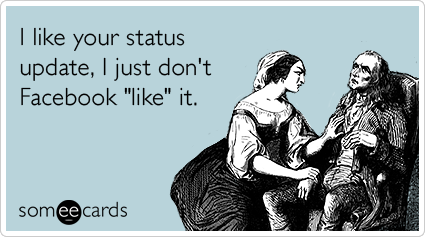
However, voiced words can be craved just like favorites and retweets. They certainly mean something, and almost always more than general Facebook praise. At the same time, their meaning and weight varies from finite to eternal depending on the source and context. Anyone who has ever had a bad breakup can attest to all the wonderful and then-authentic things that their SO once said, but that now seem like nothing more than empty lies.

facebook-status-update-like-button-confession-ecards-someecards

All of this praise, it provides a high, a rush of dopamine that is amazing and wonderful in the moment yet can leave someone too attached to the feeling over time, craving more extremely quickly. In my experience, affirmation addiction on social media only worsens these cravings offline.

In one of my last relationships, I became addicted to the positive praise I received. I’ve never told anyone this—even this person—but I kept a Word document of some of the things she said that made me feel good.

Creepy? Maybe a little. However the good intent was there, as I was trying to just provide myself some sort of proof about how this person felt when I had doubt about the relationship. While it was a nice idea and served its purpose occasionally, I always wanted more and was never truly satisfied—a classic sign of addiction. I enjoyed the praise and the moment it came in so much that this was my way of trying to make it last.

While I am over feeling like I need to archive compliments from my relationships anymore, I felt that the idea could be useful in a way that was more than just an emotional crutch.

The Paradox of Becoming Socially Stronger

I recently finished reading Steal Like An Artist by Austin Kleon (an extremely quick read and the best summary of the creative process I have ever read).

One of the ideas in the book is to keep a “praise file” for when artistic doubt inevitably creeps in. Inside this Word .doc, Evernote, whatever, it suggests placing any compliments received about your work to look at when self-doubt is present. It’s a great idea, and did make me go and compile the few comments, Facebook messages, and emails I have received about my writing. I imagine the next time I find myself in steps 2-4 of the creative process, it will be useful in breeding some positive emotions and thoughts.

I think for those that have battled with both seeking approval and improving their social skills, this idea lends itself perfectly: making a list of positive experiences, interactions, and those small “social victories” where they felt completely like themselves and in a flow state. Especially in the beginning, reflecting on this list and just knowing that it exists is an extremely beneficial way for recovering shys to provide beneficial reinforcement to themselves.

meangirlspic_float

The difficulty of it all is that anyone that wants to become more social, is in a way, wanting the approval of others in social settings. There is a certain level of positive feedback that is required to become more socially successful—there is obviously no way to increase your social awareness or know if something is a good conversation starter without paying attention to the emotions and actions of the other person in an interaction.

And herein lies the paradox: becoming socially free involves a large degree of not caring about the approval of others, yet the reason most want to develop their social skills is for their approval and acceptance.

Quite the circle, eh?

It’s a fine line, and for someone that struggles with social anxiety, it might take years to figure out that healthy balance (I know that was the case and occasionally still can be for me).

However, if the boundary can be made between keeping this positive feedback in a file (be it just a mental one) as positive reinforcement versus ego fuel and the sole reason for action, then I think this is an overwhelmingly positive thing for recovering shys to do.

Good Proof vs. Bad Proof

I’ve written before about the lasting power of a compliment, and while verbal praise doesn’t mean forever, it doesn’t change the fact that the compliment was about you.

83d821a400e902e88712e0ee3d9b7509Contexts will change, that person will change, the relationship will change, you will change on some level—however that compliment was about a real part YOU, not a mirror bathroom shot, witty status update, or what you ate for lunch today. It was about something deeper, and forgive me for going off the existential deep end, about some sort of energy inside you that will always exist in some form or another. All these ever-changing variables do not make the praise any less valid or valuable as a reference point.

An example would be the random text message compliment about my charisma I received that I mentioned in the wrap up for 90 Compliments. I saved it as a screenshot, and while I’ve since backed up and erased all the photos on my phone, I know it exists somewhere. If I am having a day where I feel like a grump and am doubting that I’ve gained any sort of social skills over the years and am just full of shit, I will think back to it. It’s there, it was said unsolicited, and even if my social skills have actually regressed, it’s still an exhibit of my potential or capabilities.

It might seem like I am contradicting myself by saying that wanting approval on social media is negative but wanting it in person is good. However, if 90 Compliments taught me anything, it is that giving compliments can be genuinely difficult. And as a general rule of thumb for life, typically the most difficult things carry the most meaning in the end.

Verbal praise and having great conversation with someone is not a Facebook like or a starred post—it’s much better, and its value lasts much longer.

I am a work in progress with all of this like anyone else, learning to free myself from this affirmation addiction. However, through reading, meditation, and just experiencing more life in general, it has been one of the most rewarding struggles I have put myself through, similar to an addict starting to remember life before their dependence. Had I not learned to enjoy this battle, for instance, there is no way I would have ever sit down to write a 1300-word piece about my neediness, let alone put it out publicly let alone promote it on social media. *gasp*

In my experience, becoming socially stronger is much more than just learning social acuity. Counterintuitively, it’s more about just doing without any sort of desired outcome and just being you for the sake of being you.