Introvert is not a dirty word

I used to be a prophet.

Not in the religious sense of course, but in that I once gave myself a self-fulfilling prophecy that I followed dutifully for many, many years.

Like many young children, I was shy. No big deal, many kids go through this phase.

The problem began when I would repeatedly tell myself that I was shy. . .year after year after year. It had become an excuse to not push myself socially.

I made plenty of friends, but it was always a slow process- I wanted more than anything to be like the kids that could walk into a room full of strangers and leave a few hours later with five new best friends.

Through self-improvement materials and consistent effort, I slowly got ‘better’ by the time I graduated college. I could feign myself as a social butterfly for several hours but anything beyond that and I would feel like I was reverting back to my ‘old self’. Then would come frustration and bitter internal dialogue:

“You’re not really over your shyness; you haven’t changed at all; you’re just slightly better at faking it and tricking people; you’re lying to yourself.”

My whole life, I thought that being shy and being introverted were interchangeable; synonyms of one another.

Then on a whim one day, I took the Myers-Briggs Personality Test (MBPT). And while I had my reservations, I couldn’t help be a little inspired by the result I received.

According to the assessment, I am an INTP (Introverted iNtuitive Thinking Perceiving), a person that:

. . .prizes autonomy in themselves and others [and] generally balk at attempts by others to convince them to change.

. . .tends to be impatient with the bureaucracy, rigid hierarchies, and the politics prevalent in many professions.

. . .has the ability to grasp complexity but which may also lead them to provide overly detailed explanations of simple ideas, and listeners may judge that the INTP makes things more difficult than they need to be.

. . .may prefer working alone to leading or following in a group

. . .is focused on gathering information, and may seem oblivious, aloof, or even rebellious—when in fact he or she is concentrating on listening and understanding.

. . .may defuse tension through comical observations and references. They can be charming, even in their quiet reserve, and are sometimes surprised by the high esteem in which their friends and colleagues hold them.

. . .experiences emotions as an important part of their internal lives, and sometimes share their emotions with others, INTPs nevertheless believe that emotions must not play a role in logical discussions, or be expressed in a way that would put themselves at disadvantage.

Jesus. Every time I read it I am still a little taken aback- and if you have ever known me for any period of time (or read anything I’ve ever written) it’s probably not difficult to see why.

While I am extremely wary of the phenomenon that happens with cold reading and horoscopes, where the brain warps a general yet relevant-enough statement about yourself to seem true, this nailed the unabridged me in writing better than I could have done myself.

(I recognize that believing what was written about me in a personality test could just be another self-fulfilling prophecy, but at least it’s a much more positive one and that there is some kind of scientific reasoning behind it).

Seeing everything spelled out so clearly has made me much more prideful of who I am, and definitely has shed light on some of the things I do and feel. However, I am also careful to not let the test put me in a box and live my life only by what is in my MBPT description.

The key difference between introversion and shyness that I never wrapped my head around was that while introverts don’t necessarily mind interacting with others, after a while it drains on them and they then require time alone in order to collect their thoughts and ‘recharge’.

Shys, on the other hand, have anxiety from fear of social judgement through interacting with people, though they may not necessarily want to be alone. They fear that their every action is being judged, their every move being watched. Looking back, there was definitely a time in my life (and I am sure the lives of many, many others) where I fell into this pattern of thinking.

Extroverts gain stimulation from their surrounding environment- the more going on the better. Introverts gain stimulation from their own thoughts, be it they are by themselves or in deep conversation with one or two other people in a controlled and calm environment.

Of course overlap exists, and no one’s ‘setting’ is permanently locked on introvert or extrovert- every day is different and people typically fall somewhere in between.

I had a roommate in college that was extroverted nearly 24/7- he could never just sit and relax, he always had to have something going on. He even commented to me several times that he can’t stand driving alone, which is time that I cherish and look forward to after a long day.

Unfortunately, we live in an extrovert’s world, and even though nearly half of the population is introverted, you would never know it, as we a live in a society dominated by constant, flashy, grandiose stimulation- an extrovert’s natural habitat. Loud things get more attention than quiet things, it’s as simple as that.

I now take pride in openly saying that I need ‘me’ time. When I am hanging out with people for a long period of time, and end up getting a little quiet in the middle of the day, people are surprisingly receptive- and able to relate- to just needing a little bit of time in my head.

This is of course better than the alternative of trying to desperately force energy-less (and often awkward) interactions.

The icing on the learning cake for me was this fantastic (and maybe my all-time favorite) TED talk from Susan Cain:


Beware of those who claim to have the truth (and especially those that claim to be a prophet), but if you ever feel in doubt of who you are, I encourage you to try out the MBPT.

Running shoes ruined running

My entire childhood I hated running with every fiber of my being (unless I was chasing a ball).

Looking back now, I realize that most of this hatred stemmed from never being taught to run, which might sound like a very profound thing. It’s running, it’s like breathing- there can’t be a wrong way to do it, right?

For thousands of years and billions of miles, people ran without what are recognized today as ‘running shoes’.

Then in the late 1970s shoe companies entered a kind of arms race with each other, adding more and more gimmicks and ‘corrective technology’ to try and separate their product from the competition’s. The public eventually became convinced that running was an activity that required some sort of safety equipment, and soon the modern running shoe became a staple for runners and athletes of all kinds to own.

While there is no arguing that around this time footwear corporations began to make a monumental impact on everything from pop culture to sports marketing, big impacts were also felt elsewhere: in runners’ knees and shins.

Although one could argue that running wasn’t as big of a recreational activity back then as it is now, the number of injuries since the dawn of these ‘innovations’ has unquestionably risen.

In his fantastic book Born to Run, Christopher McDougall documents a Native American tribe called the Tarahumara (“those who run fast” in their native tongue).

Living amongst cliffs and gorges in Northern Mexico, the Tarahumara gained notoriety in the athletic world by regularly running across this rugged terrain in distances exceeding 100+ miles without stopping. They do this barefoot or in sandals, and without injury.

Nike founder Phil Knight would lead you to believe that this would be an impossible feat without shock columns for responsive cushioning and a carbon rubber heel. How can this be?

Try this little experiment sometime:

Put on your favorite running shoes or cross-trainers with the big cushiony heel and go for a quick jog. Doesn’t have to be far at all, even just a block is fine.

Notice what part of your foot makes contact with the ground first. It is likely your heel, followed by a roll forward onto the ball of your foot.

Now, take off your shoes, and go run the same distance. Where is your foot striking this time? Probably not at your heel, and if it is you are probably on your way to the emergency room. Likely you are now landing on your forefoot, in between your arch and your toes. Your stride has probably also shortened, as to soften the impact of your feet hitting the ground.

While landing on your heel absorbs this impact in your knees and shins, landing on your fore or mid-foot captures this energy in your tendons and calves. This not only strengthens your muscles and allows them to work like a kind of natural spring, but it allows a runner to go further with less effort and injury. Endurance expert Brian McKenzie explains further:


Humans were designed to run barefoot. While running barefoot or in minimal shoes (which shoe companies thankfully seem to be trending towards) may seem like it would be risking injury to the sensitive undersides of your feet, be cognizant again that without the inch of foam below your heel, your body automatically switches to a much more conservative running style. The cushioned heel is just a mask, a band-aid on the problem of running with reckless form and shin-split, hairline-fracture-causing heel impact.


For me, running had become fun again, and it just felt right. So right, that when I first discovered these concepts in college I would sometimes deliberately choose to run home from a friend’s house (about a 20 minute walk) simply because it was a more efficient means of travel, and it no longer felt painful or like a chore. Running became useful.

I bought my first pair of minimal shoes a few months later. Everything ever written about minimal/barefoot running suggests to start out going 1/10th of the distance you normally would.

I, being stubborn and an idiot, did not heed this advice as I was so amazed at how easy running had suddenly become, and on my first run I cranked out around three miles (a distance I had done maybe once before in my life).

The last half mile of that run, my calves turned to cement, a state they remained in for about four days.

But once my body got used to this new method of running, I began destroying running records that I had only previously obtained due to forced conditioning for a sport or summer gym class in high school. I had run a 5k distance once in my life, and now I was running more than double amount with zero discomfort.

Running had switched from being a question of physical will to a mental one- for many runs, the only thing that stops me is the want to go do something else. Finally, running was more than just a source of dread and punishment.

All because of a one-inch piece of foam.

Trust the Tomato

Having a lot of free time means nothing if you don’t know how to effectively use it.
As mentioned recently, I managed to pound out the content for my first ebook in two weeks last summer simply by writing 1,000 words first thing each morning.

“Man, I can actually do this,” I thought. “Drive isn’t that hard to come by after all.”

But when it came time to edit those 15,000 words, I hit a wall. I simply could not convince myself to sit down and edit unless I was having an optimal day with nothing else going on, a clear mind, and feeling super motivated. The instances where all three of these applied were of course rare.

The leaves started to change color and fall, and soon it was the beginning of November and I still hadn’t made it through two rounds of edits. I was struggling- this project wasn’t supposed to be a long-term one.

When it came time to learn all about formatting text for an ebook and doing all of the coding and tweaking that comes along with it, I would have been sunk if I didn’t come up with a better way to manage my time.

I remembered reading a long time ago on Lifehacker about something called the Pomodoro Technique. I must not have given it any merit, because I didn’t remember anything about it other than the raving reviews.

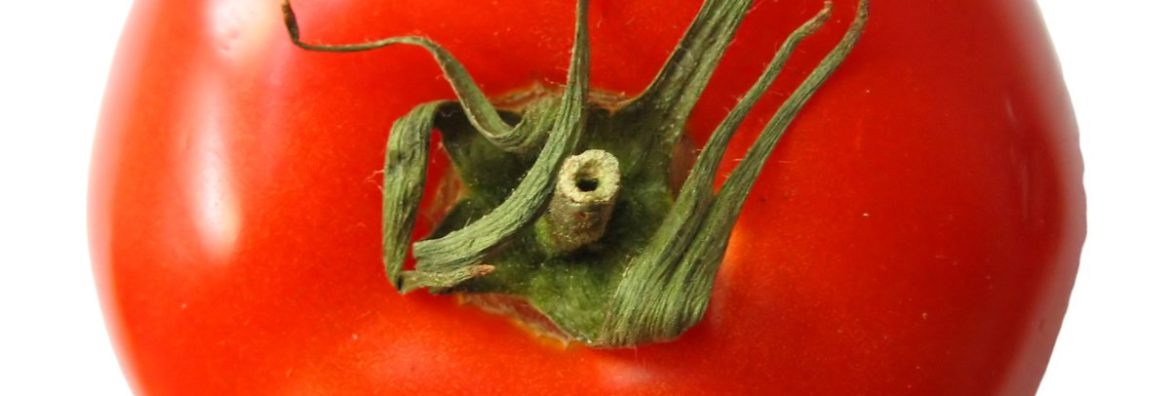
Pomodoro is Italian for tomato, and what that has to do with productivity I am uncertain(and it’s much more amusing to me if I don’t know).

The concept is disgustingly simple:

Figure out what manageable tasks you want to attack that day. Then, be it on your kitchen timer, an app on your iPhone (which I use), or the ‘official’ Pomodoro tomato timer, set a clock to 25 minutes. Then go.

When time runs out, relax. Mark an ‘X’ on a piece of paper and take a five minute break. Tidy up your desk, socialize, browse blogs, go to the bathroom, refill your cup of coffee. When that time then reaches zero, work another 25-minute session.

Once you have four X’s- pomodoros- complete, take a 20-minute break.

That’s it.

25 minutes is such a bite-sized chunk of time, you don’t even feel the temptation to hit up your usual time wasters, as if your sub-conscious is saying “psh, I can stay focused for 25 minutes, check this shit out.” Challenge accepted, if you will.

You will also frequently find yourself in a state of complete ‘flow’. Countless times I have glanced at my timer to see that I only have 7 minutes left, and the waning time makes the fire under me burn even hotter: “I can easily get this section done before my next break.”

Currently I only do four pomodoros each day, which comes to just under two hours of work. This sounds like nothing, but the fact that it is intensely focused and goal-driven work makes all the difference. Once I start working in an office again I will be eager to apply the strategy and see what kind of productivity god it will make me in an 8-hour work day.

It also makes the time fly by. I’ve used it for everything from housework to reading to apartment hunting online. It’s amazing what giving ourselves a tangible goal and a time restraint will do to our behavior.

I had experimented with lots of different productivity methods in the past, everything from The Now Habit, to Wunderlist, to devoting an entire day every week to complete every single item on my to-do list. As things usually turn out, the simplest solution ended up being the most effective.

What daily tasks do you have that could benefit from some tomato time?
(this post was written in under two pomodoros)

Published!

After six months of writing, editing, coding, testing, and coding even more, my first ebook is published and available on Amazon for Kindle e-readers.

It was an immense learning process, and through it I have gained a newfound respect for self-published authors (and code monkeys). Truth be told, I wrote the majority of the book in less than two weeks- the rest of the time was spent formatting and coding the text to look right on all e-readers- and it is still far from perfection. Sorry Kindle Paperwhite owners, I hope weird spacing on odd-numbered chapter titles doesn’t bother you too much. My sanity was at stake.

The book will eventually be available on Goodreads, Smashwords, Barnes & Nobles, and all the rest after my 90-day exclusivity contract expires with Amazon.

I know my audience with it is limited, but hopefully it can help guide at least one high school or college student who wants to work in sports and doesn’t know where to begin. In the least, it’s the first major independent project (not related to school or work) that I’ve completed. It’s also helped me develop productivity habits and a solid foundation of knowledge that will be a tremendous help to me as I begin to write my next book.

Bucket list, check:

1. Write and publish a book

24 Things I Learned From 12 Books in 2012

Shamelessly inspired by this list of Julien Smith’s.

I seriously ramped up my reading habit in 2012, and this month I successfully stuck with my new goal of 25 pages a day.

The reading list I have slowly constructed over the years is a tome in itself, so I look forward to keeping this pace and making a significant dent in it during 2013.

Here are 24 takeaways from the 12 books I read this year:


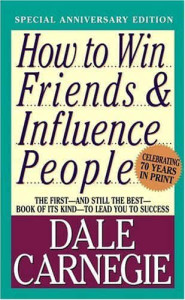
How To Win Friends and Influence People by Dale Carnegie

c

1. Speaking in terms of the other person’s interests is a foolproof way to win them over.

2. This book should be required reading by every person, ever. Every year. For the rest of their lives.

The Flinch by Julien Smith

 b

3. Live life so that your childhood self would be proud of you- not embarrassed.

4. Deliberately taking an ice cold shower is an extremely liberating and empowering feeling.

He’s Just Not That Into You by Greg Behrendt and Liz Tuccillo

 m

5. There is no ‘semi-interested’ when it comes to dating. If a man is interested enough in a woman to go on a date with her, he will ask her out. End of story.

6. When a person that is stupidly successful in all areas of their life gives you a reading recommendation that seems exceedingly counter-intuitive, drop everything and go and read it.

The 4-Hour Work Week by Tim Ferriss

 n

7. When you wake up in the morning, do your most important thing first– even before you check your email, look at your phone, or surf online.

8. Tim Ferriss has an incredible knack for making difficult things sound extremely simple and easy to accomplish.

Conversations with God by Neale Donald Walsch

 f

9. If there is a God, I want it/him/Him/her/Her to be exactly like the one in this book.

10. The meaning of life isn’t to find yourself, it’s to create yourself. And every action during every second of every day you are in a moment of pure creation. 

Outliers by Malcolm Gladwell

 o

11. How successful a child will be in competitive athletics is heavily influenced by their birth month.

12. Asian children “get” math better than kids in the Western world because their numbers are less syllables (allowing them to memorize more numbers in less time) and their counting system follows a more logical pattern.

The Art of Non-Conformity by Chris Guillebeau

 g

13. Writing 1,000 words a day is a lot easier than it sounds, and pivotal in my success as a writer.

14. People, especially close friends and family, are going to think you are batshit insane for pursuing a location-independent lifestyle. It’s important to ignore these people (where appropriate).

Connected by Nicholas A. Christakis and James H. Fowler

 h

15. If you are overweight, you likely have many friends and family members who are overweight, too.

16. In a study of thousands of adults, 68% met their spouses by being introduced by someone they knew, while only 32% met via self-introduction. People rely on introductions to find prospective partners, as there is more information readily available about them from the get-go.

Strong Enough? by Mark Rippetoe

 p

17. The closer an athlete is to their genetic potential, the slower their gains and progress will be.

18. Weightlifting gloves are silly devices promoted by fitness magazines that actually make it harder to grip a heavy and fast-moving barbell.

The Perks of Being a Wallflower by Stephen Chbosky

 j

19. It’s remarkable how many people have uncannily similar high school experiences, yet at the time you feel that nobody could ever understand what you are going through.

20. There is no better word than ‘infinite’ to describe the feeling that cruising around with your friends while the windows are down and the music is up gives.

Inverting the Pyramid by Jonathan Wilson

 k

21. Soccer tactics are derived from two components: formation (where the players are positioned in relation to each other) and style (how they move with and without the ball).

22. Some of the biggest tactical impacts in soccer came from several surprising sources: Scotland, Austria, and the Soviet Union.

Accidental Genius by Mark Levy 

 l

23. Freewriting is much more than a way to produce a large volume of writing; it can be a way to come up with solutions to virtually any problem you face in life.

24. When I read, I need to start highlighting, underlining, and marking the hell out of my books: “There’s too much to read, learn, and do in this life, and unless a volume stands out as particularly worthy, you’ll probably only thumb through it again to consult your highlights.”